


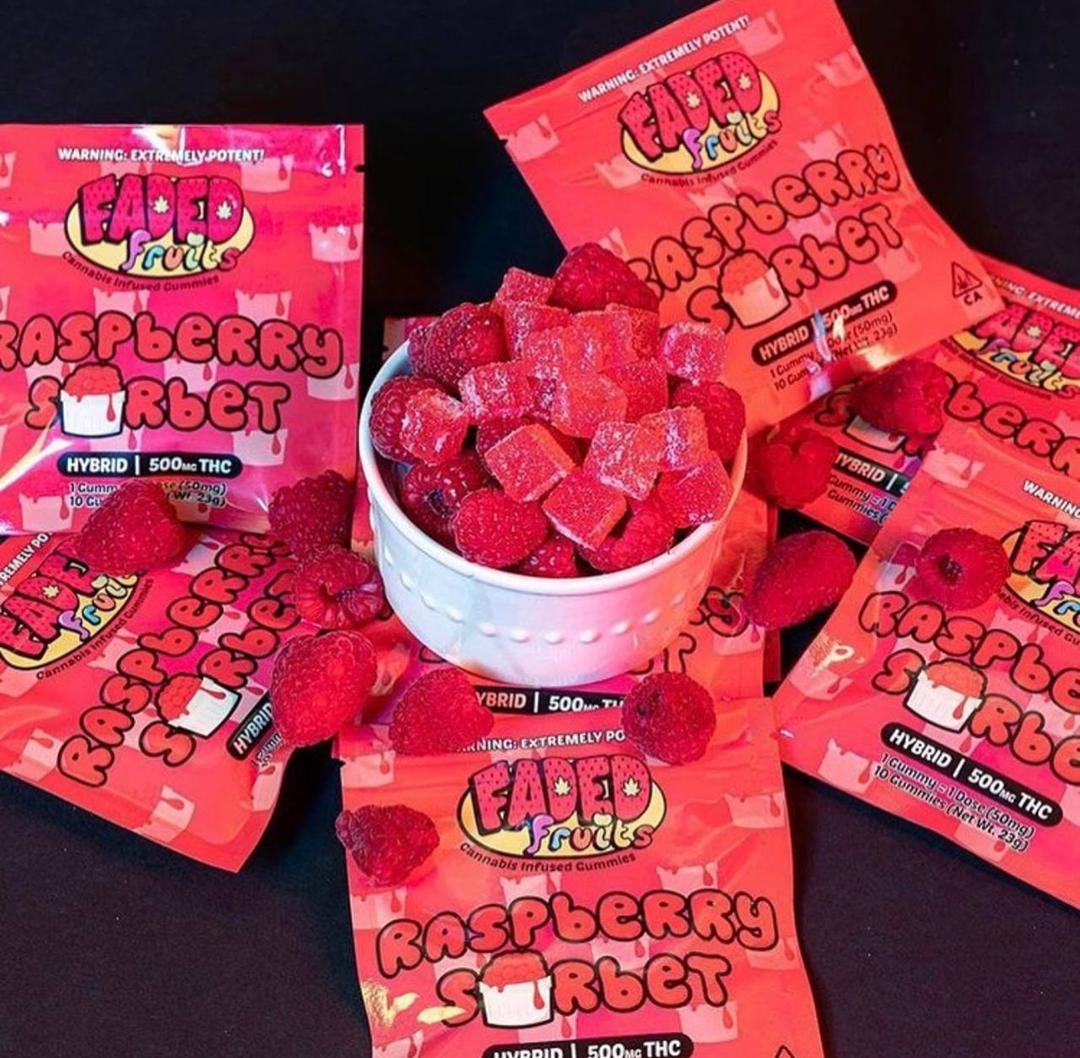
Faded Fruits Box, 100 Packs
$1,000.00
One hundred sealed Faded Fruits pouches, the first proper trade order and the sharpest value step in the box range.
On this page
- What the 100 pack box is
- The commercial threshold
- Why 100 is the value inflection point
- Using it to test demand
- Working out your margin
- Legal duties before you sell
- Age verification from day one
- Storage becomes a real cost
- Rotating stock
- Inspecting a commercial case
- If you are buying it for yourself
- Scaling from here
- Setting your retail price
- What goes wrong at this tier
- Questions about this box
What the 100 pack box is
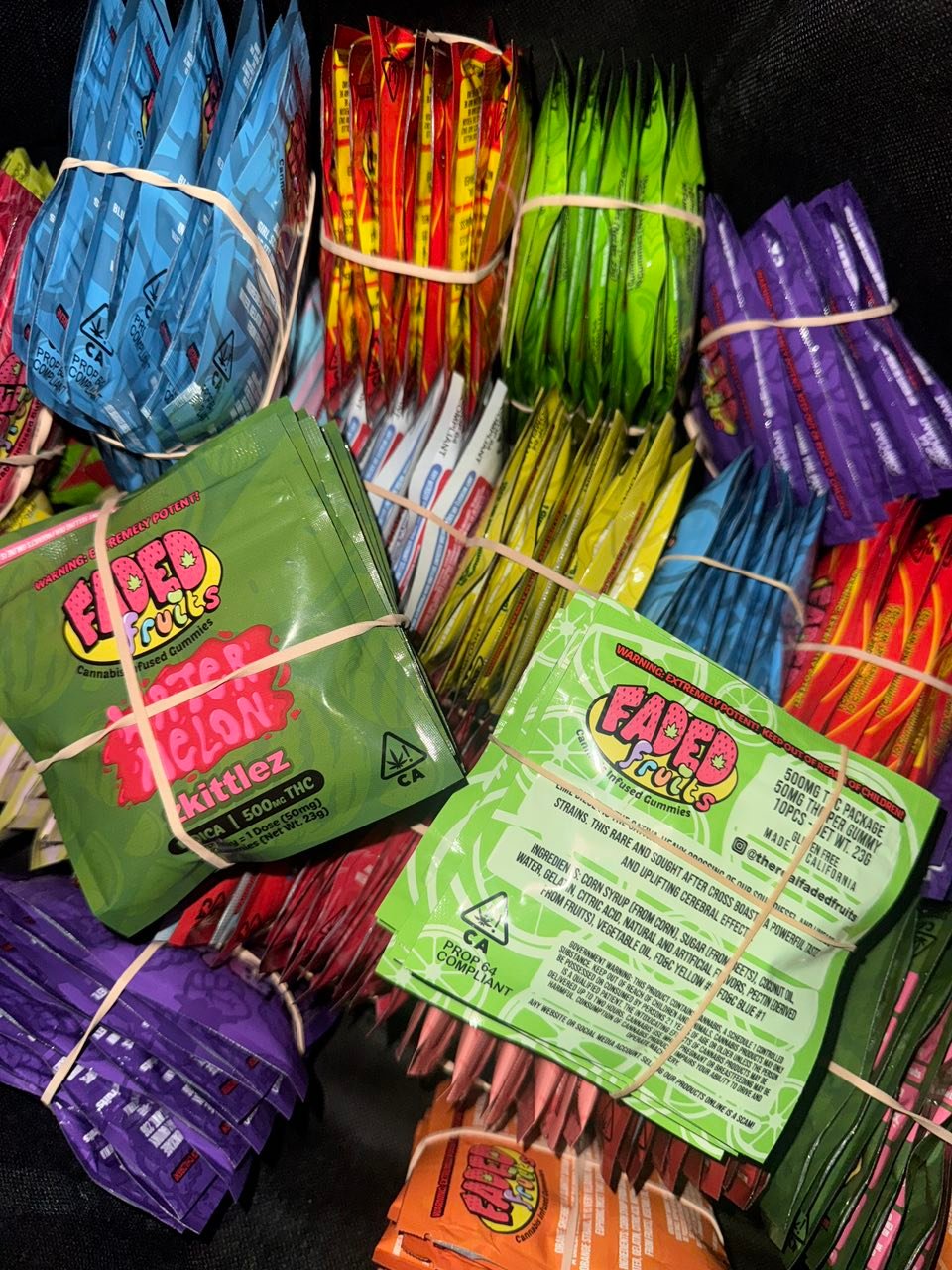
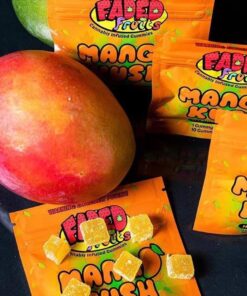
One hundred individually sealed retail pouches in a single case, each the same unit sold singly in the Faded Fruits gummies range with its own printed strength, flavour name and resealable strip.
This is the size where the box range stops being a personal purchase and becomes a trade one. It is the most common first order from people who intend to resell, and it is deliberately positioned there: large enough to test whether product moves, small enough that finding out it does not will not hurt.
The commercial threshold
One hundred pouches is roughly two thousand servings at a half piece each. No household consumes that inside a quality window, so if you are buying this size you are almost certainly selling, gifting at scale, or supplying a venue.
That changes what matters. For a personal buyer the questions are flavour and storage. For a commercial buyer they are turnover, margin, legal position and the practicalities of holding stock, and the rest of this page is written for that reader. If you are buying for yourself, skip to the section near the bottom on personal use.
Why 100 is the value inflection point
The discount curve across the box range is not linear, and the step from 50 to 100 is the steepest proportional improvement in it.
| Tier | Character | Unit price movement |
|---|---|---|
| 25 packs | Personal | Baseline discount |
| 50 packs | Household | Modest improvement |
| 100 packs | First trade order | Sharpest step in the range |
| 500 packs | Established resale | Better, needs storage |
| 2500 packs | Distribution | Best tier, real commitment |
The reason is handling. Picking and packing one hundred pouches costs the supplier barely more in labour than picking fifty, so the fixed cost spreads across twice the units. Above 100 the improvements continue but they come from stock commitment and freight efficiency rather than from handling, and they are correspondingly shallower per step.
Always compare total delivered cost rather than sticker price between adjacent tiers, since carriers price in weight bands and an order that just tips into the next band carries a disproportionate shipping cost.
Using it to test demand
The most valuable thing this case buys you is information, and it is worth ordering with that explicitly in mind.
Track what actually sells. Note which flavours move first and which sit, how long the case takes to clear, what price point customers accept without hesitation, and whether repeat buyers emerge. One hundred pouches is enough volume for those patterns to be real rather than noise.
Resist the temptation to skip this stage because the per unit price at 500 or 1000 looks better. A larger case bought on an untested assumption is how resellers end up holding stock they cannot move, and no discount survives that. Spend one case learning, then scale into what you now know works.
Consider spreading a first commercial order across ranges rather than committing entirely to one. The Full Send line appeals to buyers who prefer plain fruit naming, while FKEM serves the higher strength end. What sells for you may not be what sells generally.
Working out your margin
Your real cost per sold pouch is higher than the invoice, and building the full picture before setting a retail price prevents an unpleasant surprise.
Start with delivered cost, meaning case price plus shipping divided by one hundred. Then add payment processing, which runs higher than average in this category, packaging if you ship onward, and your own time picking and dispatching. Then assume a small percentage of the case will not sell at full price through damage, age or being a flavour nobody local wants.
Finally, count the capital tied up. Money sitting in a case is money not doing anything else, which is a genuine cost even though no invoice records it. Our wholesale guide works through this in more detail.
Legal duties before you sell
This is entirely yours to establish and it is the part most first time resellers skip.
Cannabis edibles are governed by state law in the United States and the position varies sharply across borders. A product moving freely in one state may be prohibited outright in the next, and unlicensed novelty edibles are generally treated more strictly than licensed dispensary goods. The National Conference of State Legislatures maintains a summary of state cannabis law that is a reasonable starting point, though it is not legal advice.
No supplier can establish this for you, and the consequences of getting it wrong fall on you rather than on whoever shipped the case. If you are operating at any scale, an hour with a lawyer who knows your state is cheap insurance.
Age verification from day one
Have a policy in place before the case arrives, not after a problem forces the question.
In person that means checking identification and having a written policy your staff actually follow. Online it means a verification step at checkout rather than a click through banner, and a record that it happened. Beyond compliance, packaging designed to resemble ordinary confectionery attracts regulatory attention precisely because of the risk to children, and a seller who can demonstrate a serious policy sits in a very different position from one who cannot.
Storage becomes a real cost
At one hundred pouches you need dedicated space rather than a cupboard shelf, and this is where margin quietly disappears if you get it wrong.
Keep the case somewhere cool, dark, dry and stable, off concrete floors which draw damp, out of direct sunlight and away from any heat source. Heat is the killer: pouches stored warm soften, fuse and shed their coating, and the stock becomes unsellable even though nothing is chemically wrong. A steady moderate temperature beats a cold space that swings, since cycling drives condensation inside sealed packaging.
Stack upright, never with heavy cases crushing lighter ones underneath, and secure the room properly. A hundred pouches that look exactly like sweets is a serious hazard, and volume makes a lapse worse. Our guide to storing gummies covers the detail.
Rotating stock
Write the arrival date on the carton the day it lands, and sell oldest first. This costs thirty seconds and prevents the single most common complaint resellers make about suppliers, which is stock that was simply old rather than faulty.
Quality holds roughly six to twelve months from purchase when stored properly. Work out your monthly turnover honestly and buy to it. If you move twenty pouches a month, one hundred is five months of stock, which is comfortable. If you move five, it is nearly two years and you should be buying the 50 pack instead.
Inspecting a commercial case
Open and check on arrival rather than storing it unopened. Photograph the outer carton before cutting the tape if there is transit damage, count the pouches against the stated hundred, and report any shortfall the same day.
Then sample properly, ideally ten pouches drawn from different parts of the case. Check for crisp print with clean logo edges and even colour, a factory heat seal running evenly across the full width rather than a wavy or doubled line, and gummies that move as separate pieces rather than a fused block.
Counterfeit and refilled pouches are a real problem in this brand category, since empty printed bags are sold in bulk to anyone. If you are reselling, you are putting your own name on whatever you pass on, which makes sampling every case genuinely important rather than merely prudent. Our guide to spotting a fake pack sets out exactly what to look for.
If you are buying it for yourself
You almost certainly should not be. One hundred pouches is around two thousand servings, which no individual clears inside the six to twelve month window in which the product stays at its best.
The honest recommendation is the 25 pack for a regular solo user or the 50 pack for a household of two or three. The per pouch saving at 100 is real, and it is worth nothing against stock you throw away.
Whatever size you buy, dosing is unchanged. The printed strength is the pouch total, not the per piece figure. Divide by the piece count on each new pouch, start with a small measured portion, and wait two full hours before considering more, as covered in our dosing guide. The US Food and Drug Administration has warned repeatedly that potency labelling in this segment is often inconsistent, so treat every new pouch as an unknown.
Scaling from here
If you clear a hundred pouches in under three months with repeat customers emerging, the 500 pack box is the logical next step, provided you have somewhere proper to keep it. Beyond that the range runs through 1000 and 2500 packs up to a 10,000 pack wholesale tier.
Scale on measured turnover rather than on the discount table. The tier that maximises your margin is the largest one you can clear inside a year, not the largest one available. Full comparisons are on the boxes category page.
Questions about this box
How many pouches are in the 100 pack box?
One hundred individually sealed retail pouches, each with its own printed strength and flavour. It is a case of retail units, not one large bag.
Is the 100 pack box suitable for personal use?
Rarely. It is roughly two thousand servings, well beyond what an individual clears inside the six to twelve month quality window. Choose the 25 or 50 pack instead.
Why is 100 packs the best value step?
Handling cost is nearly identical to fifty pouches but spreads across twice the units, making this the sharpest proportional saving in the range. Steps above 100 improve more gradually.
Do I need a licence to resell these?
That depends on your jurisdiction and it is your responsibility to establish. State law varies sharply and unlicensed novelty edibles are treated more strictly than dispensary products.
Can I choose the flavours?
No, boxes ship as mixed assortments from the current production run. Ask before ordering if you need a specific flavour in quantity and we will confirm what stock supports.
How quickly should I sell a 100 pack case?
Inside six to twelve months, which is how long quality holds when stored properly. Work out your monthly turnover before ordering and buy to it.
Setting your retail price
Two forces pull against each other here and both deserve respect.
Price too high and you lose volume to sellers who bought the same stock at a similar cost. Price too low and you create a different problem, because in this market an unusually cheap listing reads as a warning rather than a bargain. Counterfeit product costs almost nothing to produce, so fraudulent sellers can undercut indefinitely, and informed buyers know it. Sitting at the bottom of the market puts you in that company whether you belong there or not.
The workable approach is to survey what comparable sellers charge, sit inside that band, and compete on the things that actually generate repeat custom: answering questions before people pay, describing products accurately, shipping when you said you would, and resolving problems without an argument. Those are considerably harder for a competitor to copy than a price.
Where you do want to discount, apply it to volume rather than to the headline. A better rate on three pouches than on one lifts order value without signalling that something is wrong with the goods.
What goes wrong at this tier
Four mistakes account for most of the money lost on a first commercial case, and all four are avoidable.
Skipping the test and buying bigger. The discount at 500 packs is real and it is worthless against stock that does not move. Learn from a hundred first.
Storing it badly. A warm storeroom will destroy more value over one summer than any discount saved. This is the most common way resellers lose money in this category, and it is entirely preventable.
Not dating the carton. Without an arrival date you cannot rotate, and you will eventually be selling old stock while newer cases sit behind it.
Leaving compliance until later. Age policy, legal position and secure storage all need settling before the case arrives. Sorting them out after a problem forces the question is considerably more expensive.
Our wholesale guide covers the full picture, and the seller checklist applies with more force at commercial volumes, because the sums involved are larger.
Be the first to review “Faded Fruits Box, 100 Packs”
Related products

Faded Fruits Boxes
Faded Gummies 1000mg

Faded Fruits Boxes

Faded Fruits Boxes

Faded Fruits Boxes
Faded Fruits Boxes

Faded Fruits Boxes

Faded Fruits Boxes
Reviews
There are no reviews yet.