
Uncategorized
How to Store THC Gummies So They Do Not Melt

Feb
Gummies are more fragile than they look. Heat fuses them into a single block, humidity turns them sticky, and light degrades what you paid for. Storing them properly takes almost no effort and protects both the product and everyone in your household.
On this page
- The four things that ruin gummies
- Where to keep them
- Should you refrigerate them?
- Once the pouch is open
- What to do with a fused block
- How long they actually last
- Storing a bulk order
- The part that actually matters
- Taking gummies with you
- How to tell if a pouch has gone off
- Label your storage
- Frequently asked questions
The four things that ruin gummies
Heat is the main one. Gummies are held together by gelatin or pectin, and both soften well below the temperature of a warm car or a sunny windowsill. Once softened, pieces press against each other and fuse. When they cool they set again as a single mass, and you cannot separate them cleanly after that.
Humidity is next. Sugar coatings are hygroscopic, meaning they pull moisture out of the air. An open pouch left in a humid kitchen or bathroom goes tacky within days, the coating dissolves into a syrup, and the texture becomes unpleasant long before anything else is wrong.
Light degrades cannabinoids. Ultraviolet exposure breaks THC down over time, which is why quality product ships in opaque foil rather than clear plastic. Leaving a pouch somewhere sunny slowly reduces what you paid for, without any visible sign that it is happening.
Air dries them out. Left open, gummies go from soft to leathery to hard, and a rock hard gummy is difficult to cut accurately, which matters when your dose is a fraction of a piece.
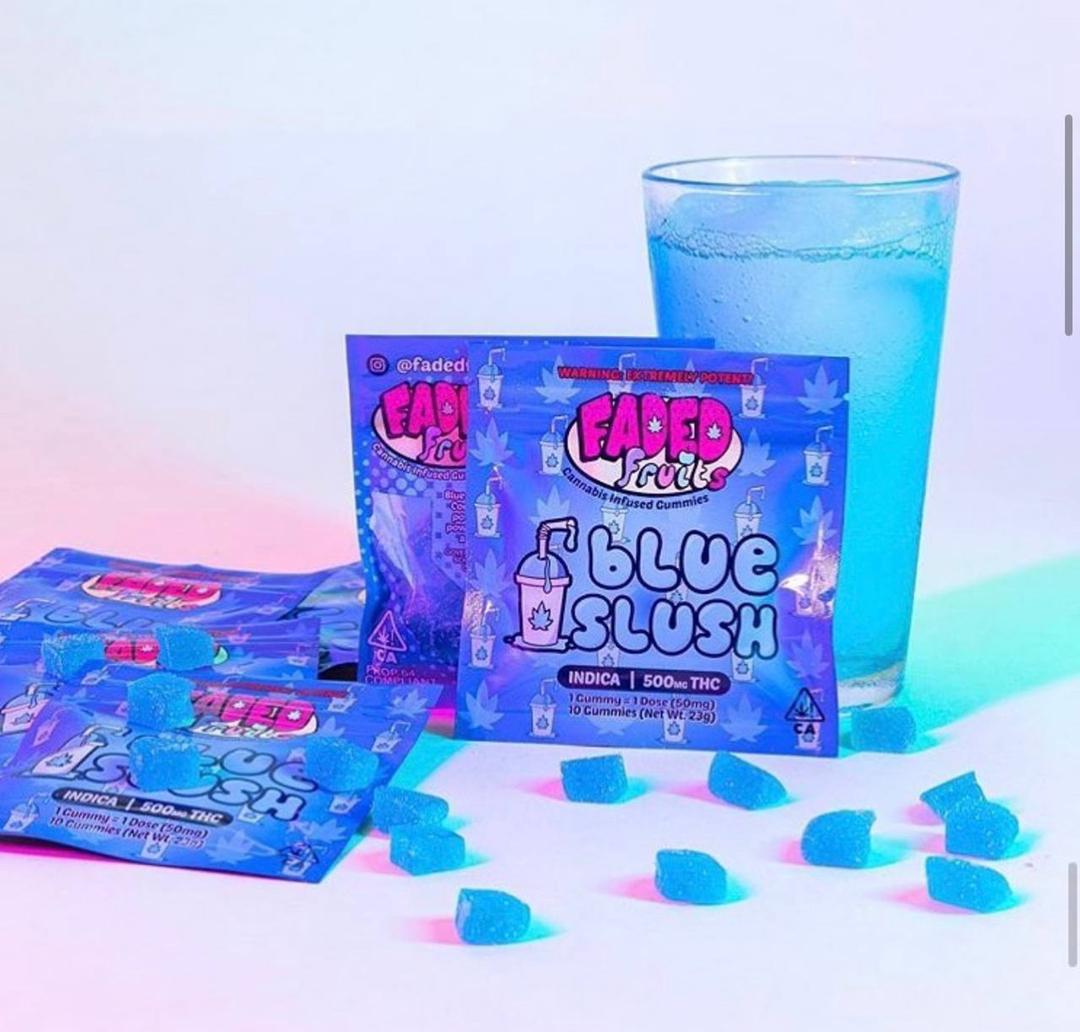
Where to keep them
| Good storage | Avoid | Why |
|---|---|---|
| Interior cupboard | Car | Cabin heat fuses pieces within minutes |
| Lockable box in a wardrobe | Windowsill | UV degrades cannabinoids |
| Bedroom drawer away from heat | Cupboard beside the oven | Much hotter than people realise |
| Stable room temperature | Bathroom | Humidity dissolves the coating |
| Original sealed pouch | Loft or garage | Follows outdoor temperature swings |
| Off the floor for bulk cases | Handbag or coat pocket | Body heat plus crushing |
The ideal spot is cool, dark, dry and stable. A cupboard in an interior room, a bedroom drawer away from a radiator, or a lockable box in a wardrobe all work well. Stable temperature matters more than cold: a cupboard that stays at a steady room temperature is better than a space that swings between cold nights and warm afternoons, because temperature cycling drives condensation inside sealed packaging.
Places to avoid are specific and worth listing plainly. Never a car, where interior temperatures on a warm day climb far beyond anything a gummy survives. Not a windowsill or anywhere in direct sun. Not the cupboard above or beside the oven, which gets much hotter than people realise. Not a bathroom, where humidity swings enormously. Not a loft or a garage, both of which follow outdoor temperature closely. And not a handbag or a coat pocket for any length of time, where body heat and crushing both apply.
Should you refrigerate them?
Generally no, and the reason is condensation. Moving a pouch between a cold fridge and a warm room causes moisture to form on the surface of the gummies each time, which makes them sticky and can encourage mould over a long period. A stable cupboard beats a fridge for ordinary storage.
There are two exceptions. If you live somewhere genuinely hot and have no room that stays reasonably cool, the fridge is the lesser problem, since fusing is worse than stickiness. In that case keep the pouch sealed, put it inside a second airtight container to buffer against moisture, and take out only what you need rather than opening the pouch repeatedly at fridge temperature.
The second exception is short and deliberate: chilling a single piece for fifteen or twenty minutes before cutting it makes it firm up and slice cleanly rather than squashing. That is a useful trick when you need an accurate quarter or eighth, and it does not involve storing the whole pouch cold.
The freezer is not recommended. It makes gummies rock hard, and repeated freezing and thawing damages texture badly. It does not meaningfully extend usable life either, so there is little to gain.
Once the pouch is open
The resealable strip is doing real work, so use it properly. Press it fully closed along its whole length after every single use, squeezing excess air out first. A strip that is closed at one end and gaping at the other is functionally an open bag.
If the strip has failed, which happens after enough openings, move the contents into a small airtight container or a zip seal bag with the air pressed out. A silica gel sachet in the container helps considerably in a humid climate, and you can save the ones that come with other products.
Keep one pouch in use at a time rather than opening several. Four half used pouches deteriorate much faster than one that gets finished, and it also makes it harder to keep track of what you have taken. Writing the date you opened it on the pouch with a marker costs nothing and tells you at a glance whether something has been sitting open too long.
What to do with a fused block
If pieces have merged, the product is not dangerous, but it is compromised in a way that matters. The problem is dosing: once you cannot separate individual pieces, you have lost your reference for how much THC is in the portion you are cutting, and everything in our guide to working out your dose depends on that reference.
You can sometimes recover a fused block by chilling it thoroughly and then cutting carefully along the visible seams between pieces. If the original outlines are still discernible, this works reasonably well. Dusting the cut faces with a little cornflour or icing sugar stops them re fusing.
If the block has lost all definition, treat the whole thing as an unknown. The honest options are to divide it by weight into portions matching the original piece count, which is approximate but better than guessing, or to accept the loss. Do not simply cut off a chunk by eye and hope, particularly with a high potency pouch.
How long they actually last
Stored properly, expect good condition for roughly six to twelve months from purchase. Sealed pouches at the longer end of that, opened pouches nearer the shorter end.
What changes over time is texture first and potency second. Gummies harden gradually, and cannabinoids degrade slowly, with THC converting over months and years into a compound associated with a more sedating and less pleasant effect. Neither happens abruptly, so there is no cliff edge, but a two year old pouch will be noticeably worse than a fresh one.
Discard anything showing visible mould, an off or sour smell, or an unusually slimy surface. Mould on a sugary product in a humid environment is a real possibility, and it is not worth the risk. When in doubt, throw it out.
Storing a bulk order
A case of pouches needs the same conditions, just more space. Keep the carton off a concrete floor, which draws damp, and out of any room that swings in temperature. Stack cases upright and avoid putting heavy boxes on top of lighter ones, since crushing splits seals at the bottom of a pile.
Rotate your stock so the oldest pouches are used first, and write the arrival date on each carton so you are not guessing months later. If you are holding a larger box for resale, that record also matters for customers.
Buy a size you will realistically finish inside a year. The per pouch saving on a very large case evaporates the moment you throw away stock that has gone hard, and a case that outlives its quality window has cost you more than buying smaller quantities would have.
The part that actually matters
Everything above is about protecting the product. This part is about protecting people, and it is more important than all of it.
These products are made to look like ordinary confectionery. That is the entire design intent, and it is exactly what makes them hazardous in a home with children or animals. A child who finds a pouch of brightly coloured sweets will eat them, and body weight means a dose that would give an adult an uncomfortable evening can be genuinely serious for a small child. Dogs will eat an entire pouch given the chance.
Store everything in a locked box or a cupboard with a key, not on a high shelf, and not in a kitchen drawer alongside ordinary snacks. Keep them in the original packaging so that anyone who does find them can see what they are. If a child or a pet does get hold of one, seek medical or veterinary help immediately rather than waiting to see what happens, and take the packaging with you. The National Capital Poison Center runs a free 24 hour helpline.
Frequently asked questions
How should I store THC gummies?
Sealed, cool, dark and dry, somewhere with a stable temperature. An interior cupboard or a lockable box in a wardrobe works well. Avoid cars, windowsills, bathrooms, lofts and the cupboard next to the oven.
Should THC gummies go in the fridge?
Usually not. Moving them between cold and warm causes condensation, which makes them sticky and can encourage mould. A stable cupboard is better. The fridge is only the lesser evil if you have nowhere that stays reasonably cool.
Why did my gummies melt together?
Heat. Gelatin and pectin soften well below the temperature inside a warm car or on a sunny windowsill, so pieces press together and fuse as they cool. Once fused you cannot dose accurately, which is the real problem.
How long do THC gummies last?
Roughly six to twelve months when stored properly, sealed pouches at the longer end. Texture degrades before potency does. Discard anything with visible mould, an off smell or a slimy surface.
Can I still use gummies that have fused into a block?
They are not dangerous, but you have lost your dosing reference. Chill and cut along the visible seams if the outlines remain. If all definition is gone, divide by weight to approximate the original pieces rather than cutting by eye.
How should I store a bulk box?
Off the floor, out of temperature swings, stacked upright without heavy cases on top. Rotate stock oldest first and write arrival dates on cartons. Buy a size you will finish within a year.
Taking gummies with you
Transport is where most storage failures happen, because the conditions are outside your control and the time involved is short enough that people stop thinking about it.
The car is the single worst place, and it is also the most common. A vehicle parked in sun reaches temperatures far beyond anything a gummy tolerates, and it does so within about twenty minutes. Leaving a pouch on a seat while you go into a shop is enough to ruin it in summer. If you must transport them by car, keep them in the cabin with you rather than the boot, out of direct sun, and take them inside with you at every stop.
For a longer journey, a small insulated bag with a cool pack wrapped in a cloth works well. Do not let the cool pack touch the pouch directly, which causes condensation. A hard sided container also prevents crushing, which matters more than people expect in a bag.
Separately from the practical question, be aware that carrying cannabis products across state lines or through airport security has legal implications that vary considerably by jurisdiction, and those rules are worth checking before you travel rather than after.
How to tell if a pouch has gone off
Most degradation is gradual and easy to miss, so it helps to know what you are looking for when you open something that has been sitting a while.
Texture is the first indicator. A gummy in good condition is firm but yields under gentle pressure and springs back a little. One that has dried out feels hard and cuts with a snap rather than a slice. One that has absorbed moisture feels tacky and leaves residue on your fingers. Neither state is unsafe, but both make accurate portioning harder.
Look at the coating next. Sugar or sour coating should sit as a distinct dusting. If it has dissolved into a syrupy film or if the pieces are wet looking, humidity has got in and the pouch is on its way out.
Smell tells you the most about whether something has actually spoiled rather than merely aged. A sour, fermented or musty note is a reason to discard the whole pouch, as is any visible fuzz, discolouration or filament between pieces. Sugar plus moisture plus time is a viable environment for mould, and a compromised pouch is not worth the money you would save by using it.
Label your storage
One small habit prevents most of the confusion that builds up over months, particularly if you keep more than one product.
When a pouch arrives, write the date on it. When you open it, write that date too. Note the piece count and the calculated per piece figure directly on the pouch with a marker, so that the number you need is on the item rather than in your memory or in a browser tab you closed.
This matters because piece counts vary between production runs, and a note on the pouch removes any temptation to assume that this bag matches the last one. It also means that if someone else in the household needs to know what they are looking at, the information is right there. Combined with the dosing method in our guide to working out your dose, it turns a guessing exercise into a glance.
