
Gummy packaging now lists compounds that did not exist in the consumer market a few years ago. Delta 8, delta 10, HHC, THCP, THCO. Here is what each one actually is, why they appeared, and what the alphabet soup means for a number printed on a pouch.
On this page
- Why there are suddenly so many
- Delta 9 THC, the baseline
- Delta 8 THC
- Delta 10 THC
- HHC
- THCP
- Side by side comparison
- What a blend total actually means
- The manufacturing question
- Where the law sits
- The ones you will also see
- How to read a blend label properly
- Which should you actually buy?
- Frequently asked questions
Why there are suddenly so many
This is a regulatory story before it is a chemistry one, and it makes no sense without that context.
The 2018 US Farm Bill legalised hemp, defined as cannabis containing no more than 0.3 percent delta 9 THC by dry weight. The definition was written around delta 9 specifically, because at the time that was the compound anyone cared about. Everything else derived from hemp fell outside the wording.
Manufacturers noticed. If a compound can be produced from legal hemp derived CBD, and it is not delta 9 THC, then it arguably sits outside the restriction while still being psychoactive. Delta 8 came first, then a queue of others. None of these appeared because consumers asked for them or because they are better products. They appeared because of how a sentence in a bill was written.
That origin matters for a practical reason. These are compounds brought to market through a legal gap rather than through a testing pathway, and the manufacturing question later on this page follows directly from it.
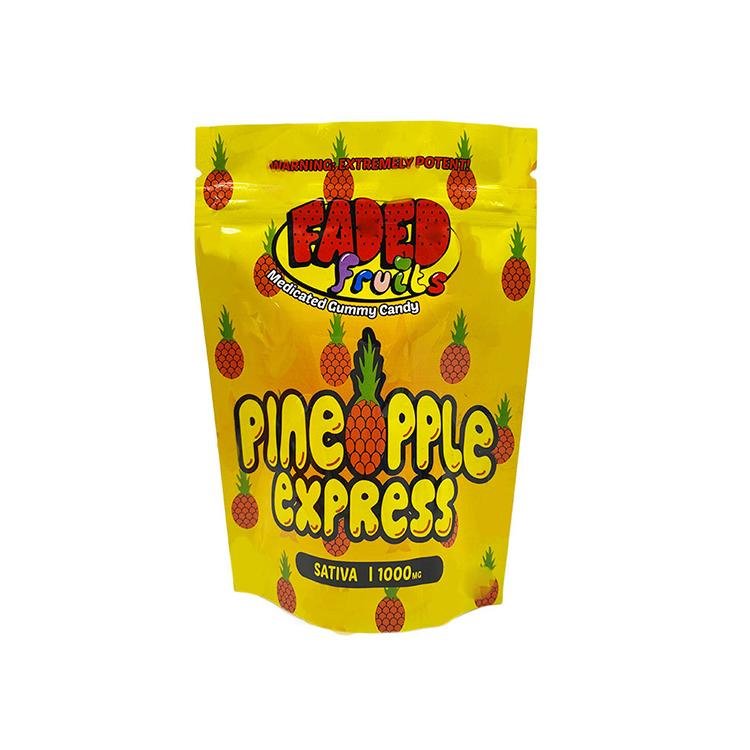
Delta 9 THC, the baseline
Delta 9 tetrahydrocannabinol is the compound people mean when they say THC without qualification. It occurs naturally in cannabis in significant quantities, it is what dispensary products are measured in, and it is the reference point against which everything else is described.
It is also the most studied by a wide margin. When you read about the effects of cannabis, the risks, the interactions or the research, it is almost always delta 9 that was studied. Every other compound on this page has a small fraction of that evidence base, and in some cases essentially none in humans.
In an edible, remember that delta 9 is substantially converted by the liver into 11 hydroxy THC, which is more potent and longer lasting. That conversion is why edibles feel heavier than smoking the same nominal amount, and it applies regardless of which compound you started with.
Delta 8 THC
Delta 8 is a close structural relative of delta 9, differing in the position of one double bond. That small difference reduces how strongly it binds to the receptors involved, and the practical result is that most users describe it as noticeably milder, commonly estimated at half to two thirds the strength.
Users frequently report it as clearer and less anxiety provoking than delta 9, which is the main reason people seek it out deliberately rather than by accident. Whether that is a genuine pharmacological difference or a consequence of it simply being weaker is not settled.
The important caveat is production. Delta 8 occurs naturally only in trace amounts, so commercial delta 8 is made by chemically converting CBD in a process using acids and solvents. Done properly in a controlled facility that is fine. Done badly it leaves residual reagents and unintended by products in the finished item, and the US Food and Drug Administration has published specific consumer guidance on delta 8 covering exactly this concern along with reports of adverse events.
Delta 10 THC
Delta 10 is another positional isomer, again differing in where a double bond sits. It is generally described as milder still than delta 8, and users often characterise it as more energising or daytime oriented, closer to what people expect from a sativa label.
There is very little research on delta 10 specifically. Almost everything written about it is user report and marketing, and the effect descriptions circulating online are largely inherited from how it is sold rather than from measurement. It is produced by the same kind of conversion process as delta 8 and carries the same manufacturing concerns.
HHC
HHC, hexahydrocannabinol, is structurally different in an important way: it is hydrogenated, meaning the double bonds have been saturated with hydrogen in a process chemically similar to how margarine is made from vegetable oil.
That change makes it more stable than THC, more resistant to heat and light and slower to degrade, which is a genuine advantage for shelf life. Reported potency sits somewhere between delta 8 and delta 9 for most users.
One quirk worth knowing is that commercial HHC is a mixture of two forms, and only one of them is meaningfully active. Manufacturers do not always control or disclose the ratio, which means two products with identical stated HHC content can differ considerably in effect. Research in humans is minimal.
THCP
THCP, tetrahydrocannabiphorol, is the one that changes the arithmetic, and it is why blend totals need to be read carefully.
Identified in 2019, it has a longer carbon side chain than delta 9 THC, and that longer chain lets it bind to the CB1 receptor far more strongly. Laboratory binding studies suggest an affinity many times that of delta 9. Binding affinity is not the same as felt potency, and the multiplier people quote is often overstated, but the direction is not in dispute: a small quantity of THCP contributes disproportionately.
The practical consequence is that a milligram of THCP and a milligram of delta 8 are nowhere near equivalent, and adding them together into a single headline number produces a figure that is close to meaningless as a guide to strength. A product with a modest THCP content can feel considerably stronger than its total suggests.
Human research on THCP is essentially nonexistent. It entered the consumer market within a few years of being identified, which is an unusually short path from discovery to shelf.
Side by side comparison
| Compound | Relative strength | Occurs naturally | How it is made | Human research |
|---|---|---|---|---|
| Delta 9 THC | Baseline | Yes, abundantly | Extracted | Extensive |
| Delta 8 THC | Roughly half to two thirds | Trace only | Converted from CBD | Limited |
| Delta 10 THC | Milder than delta 8 | Trace only | Converted from CBD | Very little |
| HHC | Between delta 8 and delta 9 | Trace only | Hydrogenated | Minimal |
| THCP | Far stronger per milligram | Trace only | Semi synthetic | Essentially none |
What a blend total actually means
When a pouch advertises a large total such as 3500mg and lists several compounds, that number is the sum of things that are not equivalent to each other. Treating it as though it were 3500mg of delta 9 will mislead you in both directions.
If the blend is mostly delta 8 and delta 10, the effective strength may be considerably lower than the number implies. If it contains a meaningful proportion of THCP, it may be considerably higher. Without a breakdown, you cannot tell which, and many products do not provide one.
The only sensible way to approach a blend product is to ignore the headline and start very low, as covered in our guide to working out your dose. Take a small fraction of a piece, wait the full two hours, and learn how that specific product behaves before you scale up. Treat every new blend as an unknown, because it genuinely is one. High total blend products such as those in the Torch range deserve exactly that caution.
The manufacturing question
Every compound on this page except delta 9 is produced by chemically converting hemp derived CBD. That process is not inherently dangerous, and it is routine chemistry performed properly in a controlled facility.
The problem is that this market grew very fast with minimal oversight, and not every producer is operating in a controlled facility. Testing of commercial products has repeatedly found residual acids and solvents, unidentified by products, inconsistent potency, and in some cases delta 9 content above the legal hemp threshold in products sold as compliant.
This is the strongest argument for buying from sellers who publish real batch testing from a named accredited laboratory, and for being sceptical of a certificate that is a generic image with no lab name, batch number or date. It is also the strongest argument for state licensed dispensary products if the question genuinely matters to you.
Where the law sits
Unsettled, and moving. These compounds reached the market through an interpretation of the hemp definition, and that interpretation has been contested continuously since.
A significant number of US states have moved to restrict or ban hemp derived psychoactive cannabinoids outright, and others have brought them under their cannabis regulatory systems. Federal agencies have taken enforcement action in some contexts. The position genuinely differs from state to state and changes frequently, so the only reliable approach is to check the current rules where you live rather than relying on a general claim that these products are federally legal.
Do not assume legality means invisibility either. As covered in our guide to how long edibles stay in your system, standard drug tests detect the metabolite rather than the legal category, so hemp derived compounds produce the same positive result.
Frequently asked questions
What is the difference between delta 8 and delta 9 THC?
They differ in the position of one double bond, which makes delta 8 bind less strongly and feel milder, commonly around half to two thirds the strength. Delta 9 occurs abundantly in cannabis, while commercial delta 8 is chemically converted from CBD.
Is THCP stronger than THC?
Per milligram, considerably. Its longer side chain binds far more strongly to the CB1 receptor. The multipliers quoted in marketing are often overstated, but a small amount of THCP contributes disproportionately to a blend.
What does a 3500mg blend total actually mean?
It is the sum of compounds that are not equivalent in strength, so it is a poor guide on its own. A blend heavy in delta 8 may feel weaker than the number suggests, while one containing THCP may feel much stronger.
Are these compounds natural?
Only delta 9 occurs in meaningful quantities. Delta 8, delta 10, HHC and THCP exist in trace amounts at most and are produced commercially by chemically converting hemp derived CBD.
Are hemp derived cannabinoids legal?
It varies and it keeps changing. They entered the market through the hemp definition in the 2018 Farm Bill, but many states have since restricted or banned them. Check the current rules where you live.
Will delta 8 show up on a drug test?
Yes. Standard tests detect THC metabolites rather than the specific compound or its legal classification, so delta 8 and similar cannabinoids produce a positive result.
The ones you will also see
A few more names appear on packaging often enough to be worth recognising, even though they are less common than the five above.
THCO, or THC acetate ester, was widely sold as an exceptionally potent option before regulators took a much harder line on it. It is fully synthetic rather than a conversion, and concern grew specifically around inhaled products because the acetate group raised comparisons with the additive implicated in serious lung injury during the vaping crisis. For edibles the inhalation concern does not apply in the same way, but the regulatory position has hardened considerably and it appears far less often now.
THCV is genuinely different from the rest, and interesting for it. It occurs naturally in some cannabis varieties and appears to behave dose dependently, acting to block the receptor at low amounts and stimulate it at higher ones. It is often marketed around appetite suppression, which is the opposite of what people expect from cannabis. The human evidence is preliminary.
CBN is what THC slowly degrades into as it ages. It is mildly psychoactive at most and is heavily marketed for sleep, though the evidence for that specific claim is thinner than the marketing implies. Its presence in an old product is a sign of age rather than a feature.
CBD is not intoxicating and is the raw material from which most of the others on this page are converted. It appears in blends as a supposed counterbalance to THC, and the research on whether it meaningfully moderates a THC experience is mixed rather than settled.
How to read a blend label properly
Given all of the above, there is a practical routine that turns an unhelpful label into something you can actually use.
Start by looking for a per compound breakdown rather than a single total. A product that tells you it contains, for example, so many milligrams of delta 8 and a specific smaller amount of THCP is giving you real information. One that offers only a large combined figure is not, and you should treat the number as a marketing claim rather than a specification.
Next, find the piece count and work out the per piece figure for each listed compound, not just the total. Then pay particular attention to any high affinity compound in the list, because that is what will dominate the experience even at a small stated quantity.
Finally, check whether batch testing is available and whether it names an accredited laboratory, carries a batch number matching your product and is plausibly dated. If all three are present, the label means something. If any are missing, treat the whole figure with scepticism and start at a fraction of what you would otherwise take.
Which should you actually buy?
For most people the honest answer is the simplest product available, and that is not a compromise.
A straightforward delta 9 edible at a modest, clearly stated strength is the best studied option, the easiest to dose predictably and the least dependent on whoever ran the conversion chemistry. Everything else on this page exists because of a regulatory gap rather than because it improves on that.
There are legitimate reasons to choose otherwise. Delta 8 suits people who find delta 9 anxiety provoking and want something milder. HHC has a genuine shelf stability advantage. Blend products can offer far more servings per pouch if you dose in fractions. Those are real considerations rather than pure marketing.
What is not a good reason is picking the largest number on the shelf. As explained above, that number sums things that are not comparable, and the products carrying the biggest figures are frequently the ones with the least clarity about what is in them. Start simple, learn how your body responds, and only move to blends once you have a baseline to compare against, using the approach in our dosing guide.
Comments are closed.