
THC Gummies in Tennessee
THC gummies Tennessee residents can legally buy are sold only in person, only by TABC licensed retailers, and only within a 15mg per serving limit. The detail that surprises most people is the shipping rule: direct to consumer delivery into Tennessee is not permitted, whether the seller sits inside the state or outside it. This page covers what changed when the Alcoholic Beverage Commission took over, and what it means in practice.
On this page
- The short answer
- The move to the Alcoholic Beverage Commission
- Serving limits and package limits
- The shipping prohibition
- Where you can lawfully buy
- What the three tier system means for buyers
- The December 2026 federal deadline
- Ordering to a Tennessee address
- Possession, driving and employment
- Frequently asked questions
The short answer
Hemp derived cannabinoid products are legal in Tennessee for adults 21 and over, but the channel is tightly controlled. Since 1 January 2026 the Tennessee Alcoholic Beverage Commission has regulated the category under a three tier supplier, wholesaler and retailer licensing system, with permanent rules effective from 9 June 2026 and a licence required to operate from 1 July 2026.
Products are capped at 15mg per serving with packages limited to 20 units, and they must be sold face to face at an age restricted or ABC licensed premises. Shipping into the state is prohibited.
The move to the Alcoholic Beverage Commission
Oversight previously sat with the Department of Agriculture, which suited a farming programme but not a consumer retail market. Moving it to the TABC was a deliberate reframing: hemp cannabinoid products are now regulated using the machinery built for alcohol.
The three tier structure is the clearest sign of that. Suppliers, wholesalers and retailers hold separate licences and occupy separate roles, mirroring alcohol distribution. It is a structure designed to make the supply chain visible and enforceable, and it is far harder to operate inside informally than the previous arrangement was.
The practical effect on the ground was consolidation. Retailers unwilling or unable to obtain a licence by 1 July 2026 left the category, so the number of places selling these products in Tennessee fell substantially.
THC gummies Tennessee serving and package limits
Two constraints operate together, and the second one is easy to overlook.
| Constraint | Tennessee limit | Effect |
|---|---|---|
| Per serving | 15mg | Caps the strength of one piece |
| Units per package | 20 | Caps how many pieces ship together |
| Implied container maximum | 300mg | Twenty pieces at 15mg |
| Minimum age | 21 | Verified at every transaction |
| Sales channel | In person only | No delivery or mail order |
Tennessee also measures compliance against total THC including THCA, rather than delta 9 alone, so THCA heavy products do not pass here even when they satisfy a delta 9 percentage test elsewhere.
The shipping prohibition
This is the rule that separates Tennessee from every other state on this site, and it is worth stating plainly because a great many online sellers ignore it.
Direct to consumer shipping and delivery of hemp derived cannabinoid products into Tennessee is not permitted. The prohibition applies regardless of where the seller is based, so an out of state retailer posting a pouch into Tennessee is outside the rules just as an in state one would be.
Georgia, Florida and Texas all restrict what may be sold. Tennessee restricts how it may reach you, which is a different kind of rule and a more absolute one. A product that would be perfectly compliant on a Nashville shelf still cannot lawfully be posted to a Nashville address.
The Tennessee Alcoholic Beverage Commission publishes the licensing rules and the current retailer requirements, and is the source to check before relying on any summary of this.
Where you can lawfully buy
In person, from a licensed retailer, in premises that are either age restricted as a whole or hold an ABC licence. In practice that means liquor stores, dedicated hemp and vape shops, and some bars, with identification checked at every transaction rather than only when a buyer looks young.
What disappeared was the convenience channel. Gas stations and general convenience stores that carried these products informally before the licensing deadline largely stopped, because the licence and the three tier structure are not worth the trouble for a low margin sideline.
For buyers this means fewer places and more consistent product, which is the trade the state deliberately chose.
What the three tier system means for buyers
Three tier licensing sounds like a supplier problem, but it changes the buying experience in ways worth understanding, because it is the reason Tennessee product looks different from what you find one state over.
Separation of roles is the core of it. A supplier may not also be the retailer, and a wholesaler sits between them. That removes the arrangement where a shop buys direct from whoever turns up with a van, which is exactly how untested and counterfeit product entered the market previously. Every unit now has a documented path from supplier to shelf.
The effect on price is upward. Each tier takes a margin, so THC gummies Tennessee buyers pay more per milligram than buyers in states with a direct supply chain. That is the cost of the traceability, and it is a deliberate policy choice rather than an accident.
The effect on range is narrowing. Wholesalers carry what moves reliably within the 15mg serving cap, so the variety of flavours and formats is thinner than the pre licensing market offered. Buyers who liked a particular product before 2026 may simply not find it now.
The effect on confidence is upward, and this is the genuine benefit. A licensed Tennessee retailer should be able to produce a certificate of analysis matching the batch on the pouch, and the chain behind it is documented. Compared with an unregulated counter, that is a real improvement, and it is the argument for the regime even for people who dislike the price and the paperwork.
The December 2026 federal deadline
Tennessee built a detailed regulatory structure that federal law is about to render largely academic.
Section 781 of P.L. 119-37, signed in November 2025, redefines hemp around total THC and imposes a ceiling of 0.4mg of total THC per container on finished products. Legislation signed in September 2026 set 11 December 2026 as the effective date for naturally occurring cannabinoids, keeping 12 November 2026 for cannabinoids the plant cannot produce on its own.
Tennessee’s implied container maximum of 300mg sits 750 times above the incoming federal ceiling. The licensing regime, the three tier structure and the 15mg serving cap all remain on the books, but the products they were built to govern stop being federally lawful hemp on that date. Tennessee already measures total THC, so its testing approach aligns with the federal method. The quantity is what does not.
Ordering to a Tennessee address
We do not ship to Tennessee, and there are two independent reasons rather than one.
The first is the shipping prohibition itself. Direct to consumer delivery of these products into the state is not permitted from any seller in any location, so the question of what is in the parcel does not arise.
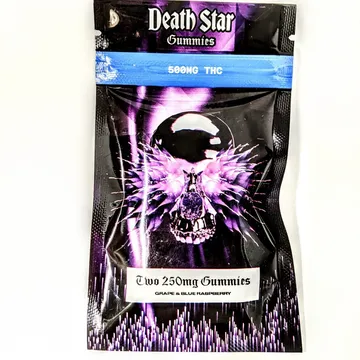
The second is potency. Our range runs from 500mg to 3500mg per pouch, against a 15mg serving cap and a 20 unit package limit. Even if delivery were permitted, nothing we stock would sit inside those limits.
If you are in Tennessee, the lawful route is a licensed retailer in person. The guidance on this site remains useful whatever you buy: portioning, onset timing and storage apply to a 15mg gummy exactly as they do to a stronger one, and the state by state guide shows how neighbouring states differ.
Possession, driving and employment
Possessing a compliant product bought from a licensed retailer is lawful for adults 21 and over. Marijuana remains illegal in Tennessee, with no adult use programme and no broad medical programme, so the distinction between compliant hemp and marijuana carries more weight here than in states with a legal cannabis market. Keep product in original labelled packaging.
Driving is prosecuted on impairment regardless of the lawfulness of the purchase, and Tennessee courts are not sympathetic on this point. An edible taken the night before can still be in your system. Do not drive on the day.
Employment protection is effectively absent. Tennessee’s drug free workplace programme gives participating employers latitude to act on a positive test, and lawful off duty consumption is no defence. Detection windows for edibles are longer than most people expect, which our guide covers.
Frequently asked questions
Are THC gummies Tennessee shops sell legal?
Yes, within limits, for adults 21 and over. Products must be sold in person by a TABC licensed retailer, capped at 15mg per serving with packages limited to 20 units, and measured against total THC rather than delta 9 alone.
Can I have THC gummies shipped to Tennessee?
No. Direct to consumer shipping and delivery into Tennessee is not permitted, and the prohibition applies whether the seller is inside or outside the state. This is a rule about the channel rather than the product, so even a fully compliant pouch cannot lawfully be posted to a Tennessee address.
What is the milligram limit?
Fifteen milligrams per serving, with packages limited to 20 units, which implies a maximum of 300mg per package. Tennessee measures total THC including THCA, so products passing a delta 9 only test may still fail here.
Who regulates hemp products in Tennessee now?
The Tennessee Alcoholic Beverage Commission, which took over from the Department of Agriculture on 1 January 2026. It operates a three tier supplier, wholesaler and retailer licensing system modelled on alcohol distribution, with permanent rules effective 9 June 2026.
Why did my local store stop selling them?
Most likely it did not obtain a licence before the 1 July 2026 deadline. The three tier structure and licensing requirements made the category impractical for convenience retailers carrying it as a low margin sideline, so the number of outlets fell sharply.
Is delta 8 treated differently from delta 9?
No. Tennessee regulates hemp derived cannabinoid products as a class and measures total THC, so switching cannabinoid does not move a product outside the rules. Non naturally occurring cannabinoids also face the earlier federal date of 12 November 2026.
Is marijuana legal in Tennessee?
No. There is no adult use programme and no broad medical programme, which is why hemp derived products carry the demand that dispensaries absorb in other states, and why the distinction between the two matters so much here.
What changes in December 2026?
The federal definition of hemp becomes a total THC standard with a ceiling of 0.4mg per container, effective 11 December 2026 for naturally occurring cannabinoids. That is 750 times below Tennessee’s implied 300mg package maximum, so the compliant market the licensing regime governs does not survive it.