
THC Gummies in Georgia
THC gummies Georgia retailers may lawfully sell are capped at 10mg per serving and 300mg per container, limits that took effect on 1 October 2024 under Senate Bill 494. Those two numbers decide almost everything about the category in this state, including which products you will find on a shelf and which you will not. This page explains the rules, the total THC test behind them, and how a label should read.
On this page
- The short answer
- What Senate Bill 494 changed
- The total THC test, and why THCA matters
- The caps in practice
- Why hemp flower is banned but gummies are not
- How to read a compliant Georgia label
- The December 2026 federal deadline
- Ordering to a Georgia address
- Possession, driving and employment
- Frequently asked questions
The short answer
Hemp derived edibles are legal in Georgia for adults 21 and over, sold by retailers licensed through the Georgia Department of Agriculture, subject to a limit of 10mg of total THC per serving and 300mg per container. Retail sale of hemp flower is prohibited outright.
Georgia is therefore a genuine but narrow market. Low dose products are entirely lawful. Anything at the strengths common elsewhere is not, and a single 500mg pouch is well beyond the container ceiling.
What Senate Bill 494 changed
Before October 2024 Georgia operated under the Georgia Hemp Farming Act with little product level control, and the market filled with the same high potency items sold everywhere else. SB 494 closed that in four moves at once.
It introduced a 21 plus age restriction at the point of sale. It replaced the delta 9 only measure with a total THC formula that includes THCA. It banned retail sale of hemp flower. And it imposed the serving and container milligram caps that now define the category.
Licensing sits with the Georgia Department of Agriculture, which registers retailers and can act against those selling outside the rules. That is a meaningful change from the previous position, where enforcement had little to attach to.
The total THC test, and why THCA matters
This is the technical point that catches people out, and it is worth understanding because it is the direction every jurisdiction is moving in.
THCA is the acidic form of THC found in the raw plant. It is not intoxicating in itself, but heating converts it to delta 9 THC, which is exactly what happens during processing or when a product is consumed. A delta 9 only test measures the plant before that conversion, so a product loaded with THCA can pass a delta 9 test and still deliver a full dose.
Georgia’s total THC formula counts the delta 9 already present plus the delta 9 that the THCA will become. That is why THCA flower and THCA heavy products cannot be sold here as compliant hemp, and it is why a product marketed elsewhere on a delta 9 percentage may fail Georgia’s test entirely.
THC gummies Georgia caps in practice
The two ceilings interact in a way that is easy to miss. The per serving cap limits how strong one piece may be. The per container cap limits how many of those pieces may be sold together.
| Product shape | Total THC | Georgia position |
|---|---|---|
| Thirty pieces at 10mg | 300mg | Permitted, at the container ceiling |
| Twenty pieces at 10mg | 200mg | Permitted |
| Ten pieces at 25mg | 250mg | Prohibited, serving cap exceeded |
| A 500mg pouch | 500mg | Prohibited, container cap exceeded |
| A 2000mg pouch | 2000mg | Prohibited by a wide margin |
The third row is the one people misread. A product can sit comfortably under the container ceiling and still be unlawful because individual pieces are too strong. Both tests have to pass, not either one.
Why hemp flower is banned but gummies are not
The reasoning is practical rather than pharmacological. Hemp flower is visually indistinguishable from marijuana, which made roadside enforcement close to impossible and effectively created a defence for anyone caught with either. Banning retail flower removed that problem in a way that capping potency could not.
Edibles present no such difficulty. A labelled pouch with a batch number and a laboratory report is straightforward to assess, so the legislature regulated it by quantity instead of prohibiting it. That is why Georgia bans one form and permits the other despite both deriving from the same plant.
The Georgia Department of Agriculture hemp pages hold the current licensing and product rules, and are the source worth checking before relying on any summary.
How to read a compliant Georgia label
Because two separate ceilings apply, a Georgia label needs reading in a specific order, and most buyers read it in the wrong one. The front of pack figure is the least useful number on the package.
Start with the serving size and the per serving THC figure, because that is the test most products fail. Ten milligrams is the ceiling for one piece. A pouch advertising 25mg pieces is unlawful in Georgia no matter how few of them are in the bag.
Then multiply the per serving figure by the piece count and check it against 300mg. Both numbers have to sit inside their limit independently. A thirty piece pouch at 10mg is exactly at the container ceiling and lawful. A twelve piece pouch at 25mg is 300mg total, sits exactly at the container ceiling too, and is still prohibited because each piece breaches the serving cap.
Then confirm the figure quoted is total THC rather than delta 9. This is where products imported from more permissive states fail. A label reading “0.3 percent delta 9” is quoting a test Georgia does not use, and a THCA heavy product can satisfy it while failing the Georgia formula outright.
Finally, check the certificate of analysis reaches a batch number matching the pouch in your hand rather than a generic document for the product line. Licensed Georgia retailers should be able to produce it. Anyone selling THC gummies Georgia buyers cannot verify this way is asking you to trust the print, and print is the easiest thing to fake, as our counterfeit guide shows.
The December 2026 federal deadline
Georgia’s caps, strict as they look beside Texas or Florida, are about to be overtaken by something far stricter.
Section 781 of P.L. 119-37, signed in November 2025, rewrites the federal definition of hemp around total THC and sets a ceiling of 0.4mg of total THC per container for finished products. Legislation signed in September 2026 moved the effective date to 11 December 2026 for naturally occurring cannabinoids, with 12 November 2026 retained for cannabinoids the plant does not produce naturally.
Set against Georgia’s 300mg container ceiling, the federal figure is 750 times smaller. The compliant Georgia market, the low dose products that survived SB 494, does not survive this. Georgia moved early to a total THC standard, which puts its testing regime ahead of most states, but the quantity ceiling it chose is three orders of magnitude above the one arriving in December.
Ordering to a Georgia address
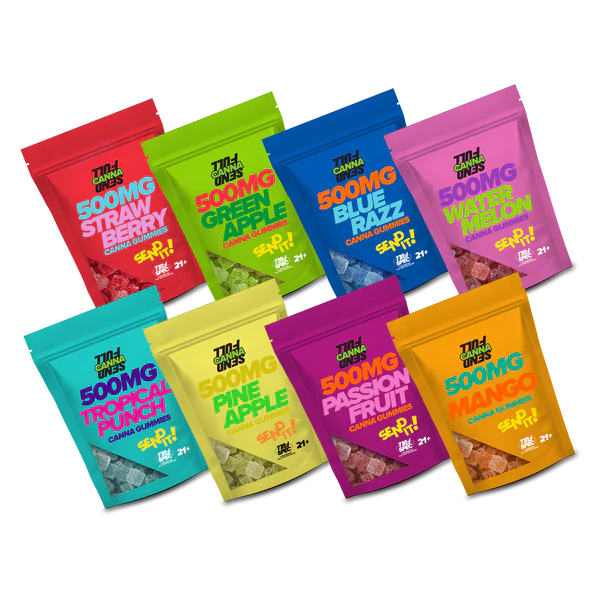
We will not pretend otherwise: our range starts at 500mg per pouch and runs to 3500mg. Every product we stock exceeds the Georgia container ceiling, most of them by a wide margin, and the strain labelled 500mg pouches exceed the per serving cap as well.
That means Georgia is not a market we can serve compliantly, and we would rather say so on this page than take an order you should not receive. Buyers in Georgia who want compliant product need a Department of Agriculture licensed retailer stocking within the 10mg and 300mg limits.
The reference material here still applies wherever you are, and none of it depends on buying from us. Onset timing, why the same dose varies and what to do after too much are the three worth reading. Our state by state guide sets out how Georgia compares with its neighbours.
Possession, driving and employment
Possession of a compliant hemp product is lawful for adults 21 and over. Marijuana remains illegal in Georgia outside the state’s narrow low THC oil programme, and possession penalties are serious, so the ability to show that what you hold is compliant hemp has real value. Original packaging and an accessible certificate of analysis are the practical answer.
Georgia enforces impaired driving without regard to whether the substance was lawfully purchased, and the state’s approach to THC in drivers is unforgiving. An edible taken the previous evening can still be detectable. Do not drive on the day.
On employment, Georgia gives no protection for lawful off duty hemp use, and its drug free workplace framework encourages testing. A positive result can end a job even where the purchase was entirely legal, and edibles remain detectable long after effects have faded, as our detection guide sets out.
Frequently asked questions
Are THC gummies Georgia shops sell legal?
Yes, within limits. Hemp edibles are lawful for adults 21 and over when sold by a Department of Agriculture licensed retailer, capped at 10mg of total THC per serving and 300mg per container. Products above either figure are not lawful here.
What is the milligram limit in Georgia?
Ten milligrams of total THC per serving and 300mg per container. Both tests must pass. A pouch under 300mg total is still unlawful if individual pieces carry more than 10mg.
Is THCA legal in Georgia?
Not as a route around the rules. Georgia measures total THC, which counts the delta 9 that THCA converts into when heated. THCA flower cannot be sold at retail, and THCA heavy products fail the state test even when they pass a delta 9 only measure.
Why is hemp flower banned when edibles are not?
Because flower is visually indistinguishable from marijuana, which made roadside enforcement impractical. Edibles arrive in labelled packaging with batch numbers and laboratory reports, so they could be regulated by quantity instead of prohibited.
How old do I need to be?
Twenty one. SB 494 introduced the age restriction at the point of sale from 1 October 2024, and licensed retailers are required to verify it.
Can I have stronger gummies shipped in from another state?
A product that breaches the Georgia caps does not become lawful because it was posted from somewhere permissive. The caps apply to the product in Georgia, not to the seller’s location, which is why we do not ship our range to Georgia addresses.
Did Georgia legalise marijuana?
No. Marijuana remains illegal outside a narrow low THC oil programme for registered patients with qualifying conditions. Hemp derived products under SB 494 are a separate framework entirely.
What happens to Georgia’s caps in December 2026?
They are superseded by something far stricter. The federal total THC standard takes effect on 11 December 2026 for naturally occurring cannabinoids with a ceiling of 0.4mg per container, which is 750 times below Georgia’s 300mg figure, removing even the compliant low dose market.