
Same pouch, same amount, same person, and yet Tuesday was gentle and Friday was overwhelming. This is one of the most common complaints about edibles and it is almost never the product being inconsistent. Here are the actual reasons, in rough order of how much they matter.
On this page
- What was in your stomach
- Where you are in your tolerance cycle
- Batch and piece variation
- Sleep, stress and hydration
- Setting and expectation
- Medication and other substances
- Cycles and other biological variation
- How the pouch was stored
- How to make sessions more consistent
- The factors ranked by how much they matter
- Diagnosing a session that went wrong
- Treat every new pouch as an unknown
- Frequently asked questions
What was in your stomach
This is the biggest single variable and it explains more inconsistency than everything else combined.
An edible taken on an empty stomach is absorbed faster and often produces a sharper, more sudden onset. The same gummy taken after a substantial meal moves through more slowly, arrives later and climbs more gradually. The difference in how it feels can be dramatic even though the dose is identical.
Fat content matters separately from volume. THC is fat soluble, so a gummy taken alongside a genuinely fatty meal tends to be absorbed more completely, which can produce a stronger overall experience even though the onset was slower. A gummy with a light salad and a gummy with a rich dinner are not the same event.
If you want predictable sessions, standardise this one thing. Taking your dose at a consistent point relative to eating, for example ninety minutes after a normal meal, removes most of the variation people find confusing.
Where you are in your tolerance cycle
Tolerance to THC builds faster than most people expect and fades faster too, and both directions catch people out.
A few consecutive days of use noticeably blunts the effect, which is why a Friday session after a run of evenings can feel weaker than the Tuesday that started it. Conversely, a fortnight off restores a great deal of sensitivity, and the first session back frequently feels much stronger than the last one before the break.
Neither is the product changing. It is your receptors adapting to recent exposure and then recovering. If you are trying to work out whether a new pouch is weaker than the last one, your recent usage pattern is the first thing to rule out, not the last.
Batch and piece variation
Some of the inconsistency is genuinely in the product, and it would be dishonest to pretend otherwise.
Unlicensed edibles carry no mandatory batch testing, so the printed total is a manufacturer claim rather than a verified figure. The US Food and Drug Administration has warned repeatedly that potency in this segment often does not match labelling, in both directions.
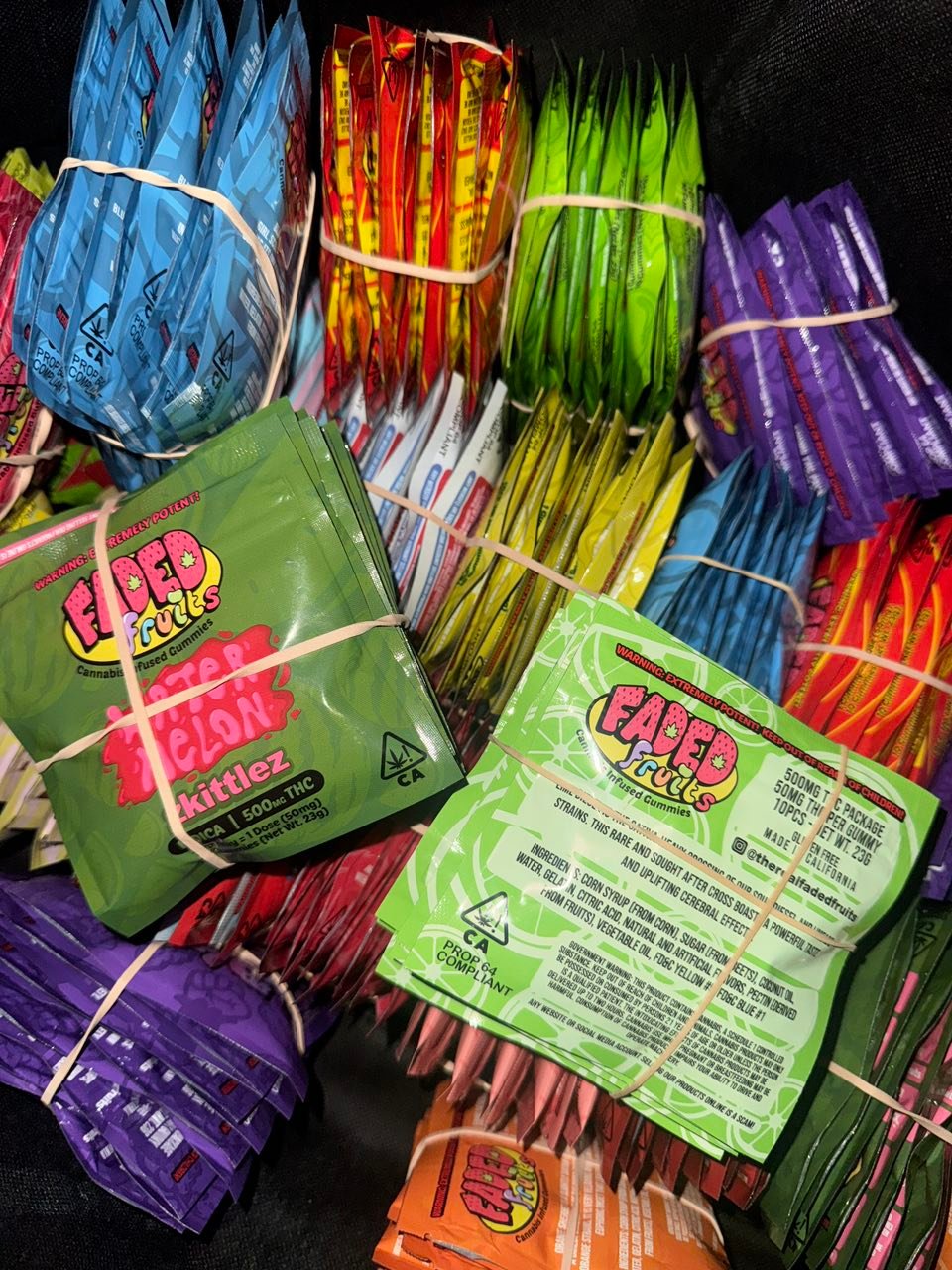
Distribution within a single pouch can also be uneven. If the infused mixture was not perfectly homogenous when the pieces were formed, two gummies from the same bag can differ from one another. This is more pronounced in small scale production, and it is one more reason to start low with any new pouch rather than assuming it matches the last one.
Piece counts change between production runs too. A pouch you assume holds ten pieces may hold twenty, which halves the per piece dose without anything appearing different. Always check, as covered in our dosing guide.
Sleep, stress and hydration
These are unglamorous and they matter more than people credit.
Poor sleep amplifies almost every psychoactive substance, and cannabis is no exception. A dose taken while exhausted commonly feels heavier and is more likely to tip toward disorientation than the same dose taken well rested.
Baseline stress is similar. Cannabis tends to amplify your existing state rather than replace it, so someone already anxious is far more likely to experience an edible as anxiety provoking, while the same person relaxed will experience it as pleasant. This is one of the most reliable patterns in cannabis experience and one of the easiest to work with once you notice it.
Dehydration contributes to dizziness and headache, which get attributed to the product but are often just dehydration made more noticeable. Drinking water through the session genuinely helps.
Setting and expectation
Where you are, who you are with and what you expect shape a drug experience substantially, and this is not a soft factor to be dismissed.
The same dose taken at home with a familiar person is a different experience from one taken somewhere unfamiliar among people you do not know well. Expectation compounds it: someone who has read that a product is extremely strong will attend more closely to every sensation and interpret ambiguous ones as evidence, which genuinely escalates anxiety.
This is why a first session with any new product is best done somewhere comfortable with nothing scheduled afterwards. You are not only reducing risk, you are removing variables that would otherwise make the session hard to interpret.
Medication and other substances
Alcohol is the most common confounder and the most consistent one. Combining alcohol with an edible reliably increases nausea and dizziness, and a session that included two drinks is not comparable to one that did not.
Caffeine raises heart rate and can sharpen anxiety, which changes the character of a session considerably. A gummy taken after a large coffee can feel edgier than the same gummy on a quiet stomach.
Prescription medication matters more than people realise. Cannabis is processed by the same liver enzyme family that handles many common prescriptions, and both directions of interaction are possible. If you have started or stopped a medication between two sessions, that alone can explain a difference. A pharmacist will answer this question without an appointment and without judgement.
Cycles and other biological variation
There is reasonable evidence that sensitivity to cannabis varies across the menstrual cycle, with hormonal fluctuation affecting how THC is experienced. People who track it often report noticeable differences at different points in the month from an identical dose.
Beyond that, ordinary biological variation applies. Liver enzyme activity is not constant day to day, and it is influenced by diet, illness, alcohol history and other medications. Recent illness or a period of poor eating can shift how you process a dose.
None of this is something you can control precisely. The useful response is simply to expect some variation as normal, and to start lower when several of these factors are stacked against a predictable session.
How the pouch was stored
An older pouch, or one stored badly, is genuinely different from a fresh one. THC degrades slowly over months into a compound associated with a more sedating and less pleasant effect, so a pouch that has sat in a warm cupboard for a year will not behave like a new one.
Heat exposure also causes pieces to fuse, and a fused block cannot be portioned accurately, so what you believe is a consistent half piece may not be. Our guide to storing gummies properly covers how to prevent this.
How to make sessions more consistent
You cannot eliminate variation, but you can remove most of it with a few habits that cost nothing.
Standardise your timing relative to food. Pick a consistent point, such as ninety minutes after a normal meal, and stick to it.
Weigh or cut precisely. Estimating by eye introduces variation you then blame on the product. Cut with a knife on a board.
Check the piece count on every new pouch. Counts change between runs, and this is the most easily avoided source of a doubled dose.
Keep a short record. Product, amount, time, what you ate, how you slept, how it felt. Four lines. After a few weeks the patterns are obvious and they are yours rather than borrowed from a general guide.
Start low on any new pouch. Treat each bag as an unknown until you have tried it once. This one habit prevents most unpleasant surprises. If you want the most consistent products to work with, the 500mg range is easier to portion than high total blends such as Torch.
Frequently asked questions
Why do the same gummies feel different each time?
Usually stomach contents, recent usage and tolerance, sleep and stress, or piece to piece variation within an untested product. Standardising when you take them relative to food removes most of the inconsistency.
Can two gummies from the same bag be different strengths?
Yes. Without mandatory batch testing, distribution of the infused mixture may be uneven, so pieces from one pouch can differ. Start low with any new bag rather than assuming consistency.
Why did a gummy feel much stronger after a break?
Tolerance fades within weeks. The first session back after time away commonly feels considerably stronger than the last one before it, from an identical dose.
Does eating beforehand make edibles weaker?
It usually slows onset and softens the climb, but a fatty meal can increase total absorption and produce a stronger overall experience. Slower is not the same as weaker.
Can stress change how an edible feels?
Considerably. Cannabis tends to amplify your existing state rather than replace it, so the same dose can be pleasant when relaxed and anxiety provoking when already stressed.
How do I get more consistent results?
Standardise timing relative to food, cut portions accurately with a knife, check the piece count on every new pouch, start low with any new bag, and keep a short written record.
The factors ranked by how much they matter
Not all of these carry equal weight. If you are trying to diagnose why one session differed from another, work down this list rather than starting with the product.
| Factor | How much it matters | Can you control it? |
|---|---|---|
| Stomach contents and fat | Very high | Yes, easily |
| Recent usage and tolerance | Very high | Yes, with planning |
| Portion accuracy | High | Yes, cut with a knife |
| Piece count assumption | High | Yes, check every pouch |
| Sleep and stress | Moderate to high | Partly |
| Batch and piece variation | Moderate | No, start low instead |
| Setting and expectation | Moderate | Yes |
| Alcohol or caffeine | Moderate | Yes |
| Medication | Variable | Ask a pharmacist |
| Product age and storage | Low to moderate | Yes |
| Hormonal cycle | Low to moderate | No, expect it |
The pattern is worth noticing: the factors that matter most are almost all within your control, and the ones you cannot control mostly sit lower down. That is encouraging, because it means consistency is largely a matter of habit rather than luck.
Diagnosing a session that went wrong
When a session is unexpectedly heavy or unexpectedly flat, run through the list in order rather than jumping to a conclusion about the product.
Start with what you ate and when. Then ask how much you have used in the preceding fortnight, since both a run of consecutive days and a long break will shift things. Then check whether you actually measured the portion or estimated it, and whether you verified the piece count on that specific pouch or assumed it matched the previous one.
If all four of those check out, then consider sleep, stress, alcohol and anything new in your medication. Only when the whole list is exhausted is it reasonable to conclude the pouch itself was different, and even then the honest conclusion is usually that the pouch was an unknown you had not yet calibrated against.
The reason to work in this order is that it produces useful answers. Blaming the product first tells you nothing you can act on, whereas noticing that you took it on an empty stomach after four days off gives you something concrete to change next time.
Treat every new pouch as an unknown
This is the single habit that experienced users adopt and beginners skip, and it costs one slightly underwhelming session to establish.
When you open a new pouch, even of a flavour you have had before, take roughly half of what you would normally take. Note what happens. If it was noticeably lighter than expected, you now know this bag runs weaker and can adjust upward next time with confidence. If it was about right or stronger, you have just avoided an uncomfortable evening.
This applies with more force the higher the stated total, because the consequences of a batch running strong scale with the concentration. It also applies when switching between ranges, since a piece from one product line may carry several times the THC of a piece from another even when the pouch totals look similar.
Combine that habit with the record keeping described above and the inconsistency that frustrates so many people largely disappears. Not because the products became uniform, but because you stopped relying on them being uniform. Our guides to dosing and timing cover the mechanics.