
The best sativa gummies are the ones that suit daytime use, and the honest starting point is that the sativa label means considerably less in an edible than it does in flower. That is not a reason to ignore it. It is a reason to understand exactly what it does tell you, which turns out to be quite useful once you stop expecting it to be a guarantee. This guide covers what we stock, what the research actually supports, and how to pick for energy rather than for sedation.
On this page
What sativa means on an edible
In botany, sativa and indica describe plant morphology: tall and narrow leafed against short and broad leafed. In dispensary culture they came to describe expected effects, sativa for uplift and focus, indica for relaxation and sleep. Modern cannabis science is fairly clear that the morphological categories map poorly onto effect, and that terpene content and cannabinoid ratio explain far more.
Then edibles add a second layer of separation. What goes into a gummy is an extract, and extraction strips out much of the terpene content that drove those effect differences in the first place. Whatever character survives usually does so because terpenes were added back deliberately during manufacture.
So what does the label actually tell you? Three genuinely useful things. It tells you the maker’s intent, that this product is formulated and sold for daytime use. It tells you that where terpenes were reintroduced, they lean toward the profile associated with that intent, often limonene and pinene rather than myrcene and linalool. And it tells you what to expect from the marketing, which is a lower bar but not a useless one.
What it does not tell you is that you will feel energised. Some people report a clear and repeatable difference between sativa and indica labelled edibles. Others notice nothing. Both experiences are common and neither is wrong. Our fuller treatment sits in indica against sativa against hybrid in gummies.
The best sativa gummies in our range
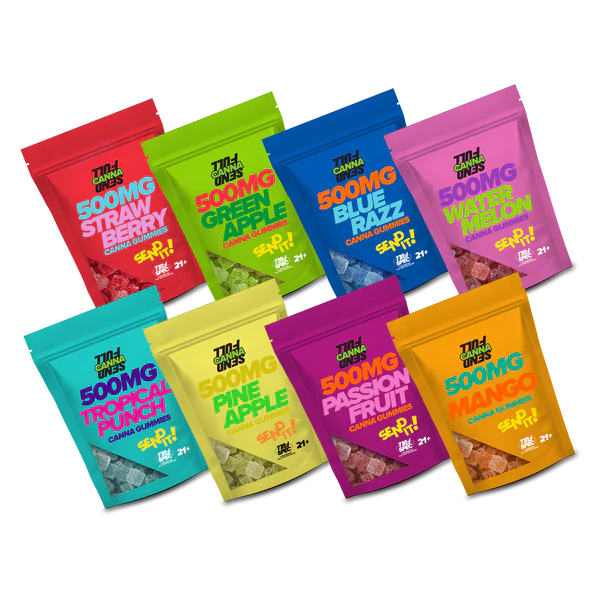
Five sativa labelled pouches, all at 500mg total, all at the same price tier, which means switching between them costs nothing and changes nothing about your dosing.
| Product | Flavour character | Total |
|---|---|---|
| Strawberry Cough | Sweet, classic strawberry | 500mg |
| Grapefruit Haze | Sharp, bitter citrus | 500mg |
| Orange Sherbet | Creamy citrus | 500mg |
| Pink Lemonade | Tart, refreshing | 500mg |
| Pineapple Express | Tropical, sweet | 1000mg |
The citrus leaning options are worth noting. Grapefruit Haze, Orange Sherbet and Pink Lemonade all sit in a citrus register, and limonene, the terpene responsible for citrus aroma in cannabis and in actual citrus fruit, is the one most consistently associated with elevated mood in the available research. Whether that association survives extraction in any given product is exactly the open question described above, but if you want to bet on the label meaning something, the citrus ones are where the reasoning is strongest.
Choosing for energy rather than sedation
People searching for sativa gummies for energy usually want one specific thing: to feel something without wanting to lie down. Four factors get you there, and only one of them is the label.
Dose is first and it dominates everything else. A low dose of an indica labelled gummy will feel more energising than a heavy dose of a sativa labelled one, every time. THC is biphasic, meaning lower doses tend toward stimulation and alertness while higher doses tend toward sedation and, past a point, anxiety. If you want energy, the lever is the amount rather than the strain name.
Timing is second. Edibles last a long time, commonly four to eight hours with a tail beyond that. A dose taken at four in the afternoon is still working at bedtime whatever the label says. Morning or early afternoon is the window for daytime use.
Tolerance is third. If your baseline is high, a small dose does nothing and you climb until you have taken enough to be sedated regardless. A break restores sensitivity faster than most people expect, which is covered in our guide to tolerance breaks.
The label is fourth. Real, worth having, and considerably less important than the three above it.
Dose matters more than label
Because the biphasic point is the practical heart of this, here is roughly how it maps for someone with modest tolerance.
| Dose | Typical character | Daytime suitability |
|---|---|---|
| 2.5mg to 5mg | Light lift, clear head | Good |
| 5mg to 10mg | Noticeable, still functional | Reasonable |
| 10mg to 25mg | Strong, absorbing | Poor |
| 25mg and above | Heavy, sedating | Evening only |
Those bands shift substantially with tolerance, body composition and what you have eaten, so treat them as a starting map rather than a rule. The method is the same regardless: work out the per piece dose from the pouch total divided by the piece count, cut to the fraction you want, and wait two full hours before judging. The portioning guide covers the arithmetic.
Building a daytime routine that works
The people who use edibles successfully during the day tend to share a few habits, and none of them are complicated.
They dose low and consistently rather than chasing a bigger effect. They take it after eating rather than on an empty stomach, which slows onset but flattens the peak and makes the whole experience more predictable. They keep the same portion across sessions so that they are comparing like with like. And they write down what they took and how it went for the first few weeks, which sounds excessive and takes about ten seconds.
They also avoid the two obvious traps. They do not take an edible before something they cannot leave, and they do not drive. An edible can impair you well beyond the point at which the peak has passed, and no roadside test distinguishes a lawful purchase from anything else. Our detection guide covers how long this persists, which is considerably longer than the effects.
What the research actually says
It is worth separating what is established from what is marketing, because this category carries a great deal of confident language that the evidence does not support.
The established part is that the indica and sativa distinction is botanical rather than pharmacological. Chemical analyses of commercial cannabis have repeatedly found that samples sold under the same strain name vary widely, and that samples labelled indica and sativa do not separate cleanly by cannabinoid or terpene content. The names survive because dispensaries and consumers find them convenient shorthand, not because they predict chemistry.
The plausible but unsettled part is the entourage effect, the proposal that terpenes modulate how THC feels. It has reasonable mechanistic support and genuine laboratory findings behind it, but the human evidence at realistic doses is thin, and much of what circulates as fact about specific terpenes is extrapolated well past what the studies show.
The reliably established part is that dose drives outcome. THC’s biphasic character, stimulating at lower doses and sedating or anxiogenic at higher ones, is well documented and it is the effect you will actually notice. The National Institute on Drug Abuse overview of cannabis is a sober summary of what is and is not known, and the CDC page on cannabis health effects covers the risk side.
None of that makes the best sativa gummies a meaningless category. It means the label is a hint about formulation intent rather than a pharmacological promise, and that anyone selling it to you as more than that is overselling.
Three mistakes people make
The first is treating the label as a guarantee and then blaming the product. If a sativa gummy made you sleepy, the most likely explanation is that you took too much, not that the label lied. Halve it and try again before writing it off.
The second is comparing edibles to smoking. Inhaled cannabis arrives in minutes and clears in a couple of hours, so a strain difference is easy to perceive and easy to correct for. Edibles arrive slowly and last for hours, which makes strain differences much harder to isolate and mistakes much harder to undo. Experience with one format tells you surprisingly little about the other, as our comparison sets out.
The third is expecting consistency across days. The same gummy taken on two different days can feel quite different depending on sleep, food, stress and where your tolerance sits that week. That is normal and it is not a product fault, which this piece explains in more detail. If you want to know whether the sativa label does anything for you, hold everything else steady and compare against an indica labelled pouch under the same conditions.
Frequently asked questions
What are the best sativa gummies for energy?
Among our range, the citrus leaning options are the most defensible pick: Grapefruit Haze, Orange Sherbet and Pink Lemonade. Limonene, the terpene behind citrus aroma, has the strongest association with elevated mood in available research. That said, dose matters far more than label for whether you feel energised.
Does the sativa label actually do anything in an edible?
Less than in flower. Extraction removes much of the terpene content that drives strain differences, so any surviving character usually comes from terpenes added back during manufacture. The label reliably indicates intended use, daytime rather than evening, rather than guaranteeing a specific effect.
Why did a sativa gummy make me sleepy?
Almost certainly dose. THC is biphasic: lower doses tend toward alertness and higher doses toward sedation, regardless of what the packet says. Halve your portion and try again before concluding the product is mislabelled.
Can I take a sativa gummy before work?
Only with real care. Edibles last four to eight hours with a tail beyond that, so a dose taken in the morning is still working in the afternoon. Employment protections for lawful off duty use are thin in most states, and driving is out for the day, so weigh that before you do.
How much should I take for a daytime dose?
Somewhere between 2.5mg and 5mg for most people with modest tolerance, which usually means a quarter or less of one piece from a 500mg pouch. Work out the per piece dose from the piece count, cut accordingly, and wait two full hours before adding more.
Is a 1000mg sativa pouch stronger per gummy than a 500mg one?
Not necessarily. The figure on the front is the pouch total, so a 1000mg pouch may simply hold twice as many pieces at the same per piece strength. Only the piece count tells you, which is why it is worth reading the back before the front.
Do sativa gummies help with focus?
Some people report that at low doses, and others find any dose disruptive to concentration. There is no reliable evidence that sativa labelled edibles improve focus, and higher doses reliably impair it. If focus is the goal, a low dose is the only version worth trying.
How do I tell whether the label works for me?
Run a fair comparison. Take the same portion of a sativa labelled and an indica labelled pouch on different days, at the same time of day, after similar meals, and note what happens. Holding the other variables steady is the only way to isolate what the label is contributing.